

If you’ve ever gone shopping for a rope halter, you’ve probably noticed something curious: the prices are all over the place. From budget options you can buy for the price of a takeaway, to handcrafted halters that cost as much as a decent dinner out, sometimes more.
So, what’s going on? Are the expensive ones just overpriced? Are the cheaper ones a false economy? The truth is… it depends. Let’s unpack the main reasons prices vary so much in the horse world.
-
Materials and Rope Quality – How to tell the difference in rope halters
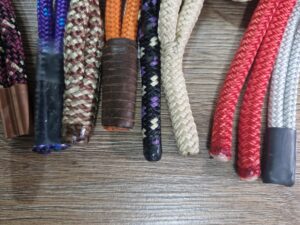
Not all rope is created equal. The diameter, weight, and fibre composition all affect how a halter feels in your hand and on your horse’s face. Cheaper halters often use low-cost polyester blends or polypropylene rope, which can be stiff, fray quickly, and lose shape when wet. They often have less core, meaning less stability. This rope can rub the horse, absorb water and sand, and weigh next to nothing, giving little to no feel in your hands or for the horse. Higher-end halters tend to use premium marine-grade rope or specialist equestrian rope that’s both durable and gentle on the horse’s skin, with a thicker core providing better stability, resisting water and sand, and having a weight that you (and your horse) will appreciate. For example, Kingfisher’s Braid on Braid Polyester rope is a heat-set, low-stretch braided polyester core with an abrasion-resistant braided polyester cover. It’s ideal for general-purpose applications, offering durability and a comfortable feel for both handler and horse. Braid on Braid High Quality Rope
-
Craftsmanship and Construction – What is the best for your horse
Some halters are made in bulk, to set patterns and sizes, with standardised knots and lengths. This keeps costs low but limits precision and consistency. At the other end, you’ll find halters made by hand, often to order, with carefully measured knots, rope ends sealed neatly, and attention paid to symmetry and balance. That level of craftsmanship takes more time, and time is part of the price.
-
Fit and Sizing Options
Some brands offer one-size-fits-most. It’s quick, cheap, and works for a large portion of horses… but it won’t be perfect for every head shape, and may actually harm your horse. Other makers provide a range of sizes or even bespoke fittings, which adds labour and skill but can result in a far better fit, comfort, and communication.
-
Finishing Touches
From the neatness of the splices to the way the rope ends are sealed, finishing details might seem small, but they affect how long your halter lasts and how it feels to use. A smooth, secure finish can mean no sharp melted edges against your horse’s face, and a halter that still looks smart after years of use.
You can often spot the difference between a budget and a quality rope halter just by looking closely at these small details.
-
Customer Service and Guarantees
This is the hidden cost factor. Some brands sell a halter and that’s it, no questions asked. Others offer fitting advice, aftercare support, or even a fit guarantee. Providing that service requires time, skill, and often travel, and it’s factored into the price.
-
Scale of Production
Large retailers and manufacturers buy in bulk and can keep prices low through volume. Small, independent makers work on much smaller batches, which means higher production costs per item. Neither is “better” but it’s why the same-looking halter might be £5 in one shop and £55 in another.
-
Practical Tip:
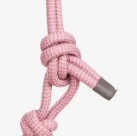
If you’re looking at a rope halter in a shop, one quick way to gauge whether the seller really knows their stuff is to check how it’s been tied up for display. If it’s tied incorrectly, it may have come from the supplier that way, but if no one’s corrected it, that’s a red flag.
Not only does it show a lack of knowledge, it also risks teaching new owners the wrong (and potentially dangerous) way to tie a halter. I’m often surprised at how many halters I see displayed like this, online and in shops, it really does make you question how much thought has gone into the product and its welfare implications.
It’s an easy trap to fall into: someone wants to improve their relationship with their horse, they’ve been recommend to get a rope halter, so they pick up an affordable rope halter to “give it a try,” but ends up using it incorrectly because that’s how they saw it was tied in the shop. The result? A potentially dangerous situation that could have been avoided with the right advice from the start.

-
Conclusion: Choosing the Best Rope Halter for Your Horse
The difference in price between rope halters comes down to more than just profit margin, it’s a mix of materials, labour, skill, service, and scale.
The right halter for you will depend on your priorities: cost, fit, longevity, ethics, or a blend of all of them. Whether you go for a budget-friendly option or invest in a handcrafted piece, understanding what you’re paying for means you can make an informed choice and that’s always worth it.
Want help finding the perfect halter for your horse? Click HERE for a free consultation, and don’t worry, you won’t get any pushy sales fluff from me!